

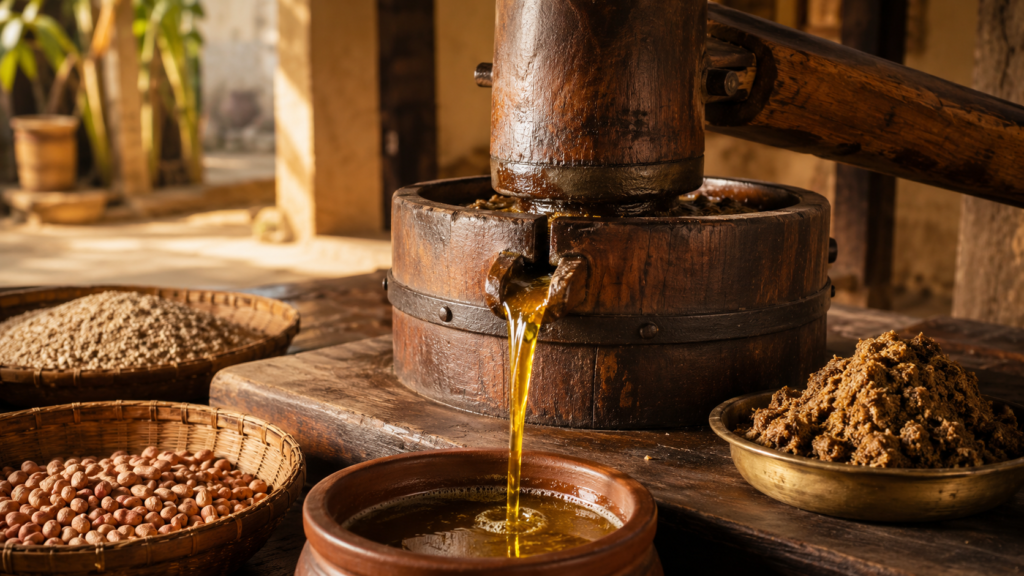
Wood-Pressed Oil: How It’s Made & Why It’s Healthier
How Wood-Pressed Oil Is Made: A Step-by-Step Look at the Traditional Mara Chekku Process If you’ve been paying closer attention to what goes into your kitchen lately, you’ve probably come across the term “wood-pressed oil” or “cold-pressed oil” floating around health blogs, farmers’ markets, and even your relatives’ WhatsApp forwards. But what does it actually mean, and why are so many health-conscious families switching back to this age-old method? The answer lies in a beautifully simple, slow, and chemical-free process that our grandparents swore by — the Mara Chekku (wooden oil press) method. Unlike commercial refined oils that go through high-heat extraction and chemical processing, wood-pressed oil retains its natural nutrients, aroma, and flavor, making it a far healthier choice for everyday cooking. In this post, we’ll walk you through exactly how wood-pressed oil is extracted, step by step, why each stage matters, and what makes this process so much better for your family’s health than mass-produced refined oils. What Is Wood-Pressed Oil (Mara Chekku Oil)? Wood-pressed oil is oil extracted using a traditional wooden churner or mill, often powered slowly to avoid generating excessive heat. This slow extraction method is what sets it apart from modern expeller or solvent-extraction techniques used in most commercial oil factories. The low-heat, mechanical pressing ensures that the natural enzymes, antioxidants, and nutrients in seeds like groundnut, sesame, coconut, and mustard remain intact — something that’s almost impossible to preserve in high-speed industrial processing. Why Choose Wood-Pressed Oil Over Refined Oil? Before we get into the extraction process itself, it helps to understand why this method matters so much for health-conscious households. 1. No Chemical Solvents Used Refined oils often use hexane or other chemical solvents to extract maximum oil from seeds. Wood-pressed oil skips this entirely, relying purely on mechanical pressure. 2. Retains Natural Nutrients Because the process happens at low temperatures, vitamins, antioxidants, and natural fatty acids stay intact — something refined oils lose during high-heat refining. 3. Authentic Aroma and Flavor Anyone who’s cooked with wood-pressed groundnut or sesame oil knows the difference immediately — the rich, nutty aroma is unmistakable and adds depth to traditional recipes. 4. No Artificial Additives or Preservatives Wood-pressed oils are typically sold as-is, without bleaching, deodorizing, or added preservatives. The Step-by-Step Wood-Pressed Oil Extraction Process Now let’s get into the heart of it — how exactly does raw seed turn into that golden, aromatic oil sitting in your kitchen bottle? Step 1: Selecting and Measuring the Raw Material The process begins with selecting good quality, clean seeds — groundnut, sesame, coconut, or mustard, depending on the oil being made. Typically, around 19–20 kg of seeds are loaded into the wooden press (chekku) machine at a time. This quantity is carefully measured because it directly affects how efficiently the machine can crush and extract oil without overloading the mechanism. Step 2: The First Pressing Cycle Once loaded, the wooden press begins its slow rotation. During this first cycle, which usually runs for about 20–30 minutes, the seeds are gradually crushed under pressure. This initial pressing helps soften the seeds and begins releasing the natural oils trapped inside. Unlike modern expellers that run at high speeds and generate significant heat, the wooden press moves slowly and steadily — and this is precisely what helps preserve the oil’s nutritional integrity. Step 3: The Extended Pressing Cycle After the initial pressing, the entire batch — including the partially crushed seeds and the oil that has already been released — goes through an extended pressing cycle of about one hour. This longer duration allows the wooden press to extract as much oil as possible from the seed mixture, ensuring minimal wastage while still maintaining the low-heat, low-speed approach. This is the stage where most of the oil separates from the seed solids (commonly called “oil cake” or “khal”), which itself is often repurposed as nutritious animal feed or organic fertilizer. Step 4: Settling and Natural Filtration Here’s where patience really comes into play. Once extracted, the oil isn’t immediately bottled. Instead, it’s left undisturbed in a container — often placed in sunlight — for 1 to 2 days. During this resting period, any fine particles or sediment from the seeds gradually settle to the bottom of the container through gravity. This natural settling process acts as a filtration step, without using any artificial filters, chemicals, or high-pressure filtration equipment. This step is crucial because it ensures the final oil is clear and clean, while still being completely unprocessed and chemical-free. Step 5: Decanting and Packaging Once the sediment has fully settled, the clear oil sitting on top is carefully separated (decanted) from the residue below. This pure, settled oil is then packed into bottles or containers, ready for use in your kitchen. Because no preservatives are added, wood-pressed oils are best stored in cool, dry places away from direct sunlight to maintain their freshness and shelf life. Health Benefits of Cooking with Wood-Pressed Oil For families trying to make more mindful choices in the kitchen, switching to wood-pressed oil can offer several benefits: It supports better digestion since the oil retains its natural fatty acid structure without chemical alteration. It provides more antioxidants and vitamin E, which are often stripped away during refining. It’s free from trans fats that can form during high-heat industrial processing. It carries a richer flavor profile, meaning you may end up using less oil overall for the same taste impact, which is a small but meaningful win for portion control. How to Identify Genuine Wood-Pressed Oil With growing demand, it’s important to know what to look for when buying: Check for a strong, natural aroma specific to the seed (groundnut oil should smell nutty, sesame oil should smell earthy and rich). Look for slight sediment or cloudiness, especially in oils that haven’t been over-filtered — a sign of minimal processing. Read the label carefully for terms like “cold-pressed,” “wood-pressed,” or “chekku oil” rather than just “pure” or “refined.” Buy from local producers or trusted
Wood-Pressed Oil: How It’s Made & Why It’s Healthier Read More »